


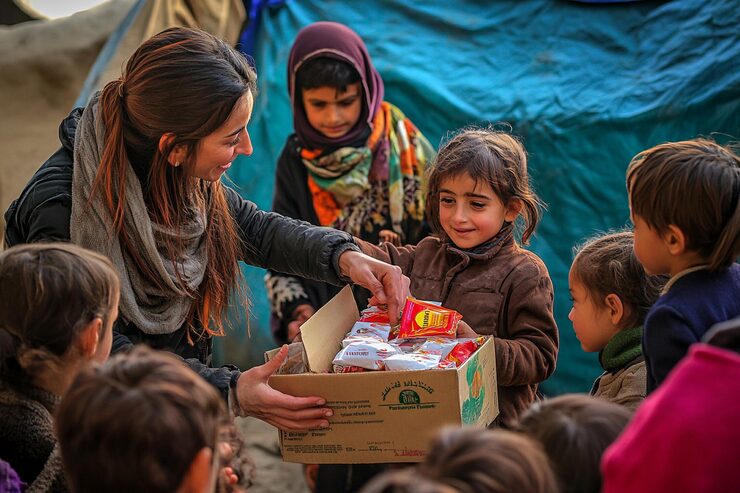
NGO full form is one of those terms you hear often in news, classrooms, social campaigns, and even during donation drives, yet many people only have a surface-level understanding of what it truly represents. In everyday conversations, NGO is commonly linked with charity or social service, but its scope, structure, and influence go much deeper than that simple idea.
The NGO full form is Non-Governmental Organization. As the name suggests, it refers to organizations that operate independently from government control while working toward social, environmental, educational, or humanitarian goals. These organizations exist to serve communities, advocate for rights, and address issues that often fall outside the immediate reach of government systems.
Understanding the NGO full form is especially important in today’s world, where civil society plays a critical role in shaping development, policy awareness, and grassroots change. From disaster relief to women’s empowerment and environmental protection, NGOs quietly support millions of lives every day.
What Is the Meaning of NGO Full Form in Simple Words
The NGO full form, Non-Governmental Organization, can be understood as a group formed by individuals or communities to work for the welfare of society without being run by the government. These organizations may receive funding from donations, grants, memberships, or international agencies, but their decision-making remains independent.
In simple terms, NGOs step in where help is needed the most. They often work closely with local communities, understanding problems at the ground level. This direct connection allows them to design solutions that are practical, inclusive, and culturally sensitive.
For example, in a rural village lacking clean drinking water, an NGO might build wells, educate locals about hygiene, and ensure long-term maintenance. While governments may plan large-scale projects, NGOs focus on personalized impact.
Historical Background of NGOs Around the World
The concept behind the NGO full form is not new. Voluntary organizations have existed for centuries in various forms, including religious charities, community groups, and social reform movements. However, the modern term “NGO” gained global recognition after World War II.
The United Nations began using the term to describe organizations that were neither government bodies nor private businesses. These organizations were invited to participate in international discussions, especially in areas like human rights, education, and humanitarian aid.
Over time, NGOs became an essential pillar of global development. Today, thousands of NGOs operate across borders, responding to emergencies, promoting sustainability, and advocating for marginalized communities.
NGO Full Form in the Indian Context
In India, the NGO full form holds particular significance due to the country’s diverse social challenges. NGOs in India work across areas such as poverty alleviation, child education, healthcare access, rural development, women’s rights, and environmental conservation.
Indian NGOs are registered under various legal frameworks, such as trusts, societies, or Section 8 companies. This structure ensures transparency, accountability, and ethical operations. Many NGOs also collaborate with government schemes, acting as implementation partners at the grassroots level.
A good example is an education-focused NGO running learning centers in underprivileged areas. While the government provides policies and funding, NGOs ensure that education reaches children who might otherwise drop out due to economic pressure.
Types of NGOs Based on Their Work
When people search for the NGO full form, they often want to know what kinds of NGOs exist. NGOs can be categorized based on their focus and approach. Some NGOs work primarily in service delivery, such as providing food, shelter, or healthcare. Others focus on advocacy, raising awareness about issues like human rights or climate change.
There are also development-oriented NGOs that aim for long-term improvement by building skills, promoting livelihoods, and strengthening communities. Some NGOs operate locally, while others have national or international reach.
Despite their different approaches, all NGOs share a common goal of contributing positively to society without pursuing profit as their primary motive.
How NGOs Are Funded and Managed
Understanding the NGO full form also involves knowing how these organizations sustain themselves financially. NGOs receive funds from multiple sources, including individual donors, corporate social responsibility programs, government grants, and international organizations.
Transparency plays a major role in building trust. Reputed NGOs maintain audited financial records and publish annual reports to show how funds are used. This accountability strengthens their credibility and helps attract long-term support.
Management within NGOs usually includes a governing board, project managers, volunteers, and field workers. Many professionals choose to work with NGOs because they seek purpose-driven careers rather than purely commercial roles.
The Role of NGOs in Social Development
The importance of the NGO full form becomes clearer when you look at the real impact NGOs have on society. NGOs often act as a bridge between communities and policymakers. They identify problems, propose solutions, and ensure that voices from the ground are heard.
In healthcare, NGOs conduct vaccination drives, awareness campaigns, and mobile clinics in remote areas. In education, they support literacy programs, scholarships, and digital learning initiatives. In environmental work, NGOs promote conservation, waste management, and climate awareness.
A real-life example can be seen during natural disasters. When floods or earthquakes strike, NGOs are often among the first responders, providing immediate relief while government systems mobilize.
NGO Full Form in Education and Exams
The NGO full form is a common topic in school curricula, competitive exams, and general knowledge tests. Students are expected not only to remember the expansion but also to understand its role in society.
Teachers often explain NGOs using relatable examples, such as organizations working for street children or animal welfare. This practical connection helps students grasp the real-world relevance of what might otherwise seem like just another abbreviation.
For exam preparation, knowing the NGO full form along with its functions, registration types, and examples can help students score better in subjects like civics and social studies.
Difference Between NGOs and Government Organizations
While learning about the NGO full form, many people wonder how NGOs differ from government bodies. The key difference lies in control and flexibility. Government organizations follow formal procedures and policies, while NGOs can adapt quickly to changing situations.
NGOs often experiment with innovative solutions at a small scale before successful models are adopted by governments. This flexibility allows NGOs to address niche issues that may not receive immediate policy attention.
However, NGOs and governments are not opponents. In many cases, they work together to achieve shared development goals.
Challenges Faced by NGOs
Despite the positive image associated with the NGO full form, NGOs face several challenges. Funding uncertainty is a major issue, as donations and grants can fluctuate. Regulatory compliance also requires time, effort, and resources.
Additionally, NGOs sometimes face skepticism due to a few unethical organizations that misuse funds. This makes transparency and ethical leadership even more important for genuine NGOs.
On the ground, NGOs may deal with difficult environments, social resistance, or limited infrastructure. Yet, their commitment to service keeps them moving forward.
Why NGOs Matter More Than Ever Today
In today’s rapidly changing world, the relevance of the NGO full form continues to grow. Issues like climate change, inequality, mental health, and digital access require collaborative efforts beyond government capacity alone.
NGOs bring empathy, innovation, and local knowledge to global problems. They humanize development by focusing on people, not just policies or statistics.
Whether it’s empowering a rural woman with vocational skills or helping a child access education, NGOs contribute to long-term social resilience.
How Individuals Can Engage With NGOs
Understanding the NGO full form can inspire individuals to get involved. People can support NGOs through volunteering, donations, skill-sharing, or simply spreading awareness.
Even small contributions, such as teaching a class, mentoring youth, or participating in a cleanup drive, can create meaningful impact. NGOs thrive on community participation, and collective action strengthens their mission.
Many professionals today collaborate with NGOs to apply their expertise in technology, marketing, finance, or healthcare for social good.
Trust, Credibility, and EEAT in NGOs
From an EEAT perspective, NGOs build trust through experience, expertise, authority, and transparency. Established NGOs showcase years of fieldwork, documented impact, and partnerships with recognized institutions.
Expertise comes from trained professionals and subject-matter specialists working on projects. Authority is built through consistent results, recognition, and policy influence. Trust is earned by ethical conduct and honest communication.
When people understand the NGO full form in this broader context, they begin to see NGOs not just as charitable bodies, but as professional, impact-driven organizations shaping society.